
When they wander or run: understanding autism and elopement
Why some autistic children wander or run, and practical ways families can help keep them safe.

Imagine being in a shopping centre, at a family gathering or simply walking through a parking area when, in a split second, your child suddenly runs off.
You call their name, but they don't respond.
You look around, trying to work out where they might have gone. Your heart starts racing, and those few moments can feel like an eternity.
For families of autistic children who are prone to wandering or running off, this situation can be a very real concern.
The behaviour is commonly known as elopement or wandering.
It is an important topic that deserves greater understanding, not judgement. More importantly, it is a safety issue that families, schools and communities need to take seriously.
What is elopement?
Elopement refers to a person leaving a safe or supervised environment without the knowledge or awareness of their caregiver.
It can happen in many different situations:
- Running away from a parent in a public place.
- Leaving the classroom or school grounds.
- Opening a door and walking out of the house.
- Moving away from a caregiver during an outing.
- Wandering towards something interesting without recognising the potential danger.
Although wandering can occur in children generally, some autistic children and young people may be particularly vulnerable because of differences in communication, impulse control, sensory processing or awareness of everyday dangers.
It is important to remember that elopement is not necessarily an attempt to be naughty, difficult or deliberately disobedient.
There may be a reason behind the behaviour that isn't immediately obvious to the people around them.
Why do some autistic children wander?
Understanding the reason behind wandering can help families identify possible triggers and put appropriate safety measures in place.

There are several possible explanations.
1. Curiosity and exploration
A child might see something interesting and want to investigate.
It could be a dog across the road, a body of water, a playground or something familiar in the distance.
Their interest in reaching that particular place may override their awareness of potential dangers.
2. Sensory overload
Busy environments can be overwhelming.
Shopping centres, family gatherings, noisy classrooms and crowded public spaces can create sensory demands that are difficult to manage.
Walking or running away might be an attempt to escape the noise, lights, people or general stimulation.
When the world feels too loud: sensory experiences in everyday life
3. Seeking something familiar or enjoyable
Some children may wander towards a favourite place, activity or person.
They might be trying to reach something they enjoy without understanding the risks involved in getting there.
4. Communication difficulties
For children who are non-speaking or have limited verbal communication, wandering may sometimes be a way of communicating a need.
They may want to leave, find something, escape an uncomfortable situation or access an activity but not have an effective way to express this.
Understanding life beyond spoken words
5. Impulsivity
For some children, acting on an immediate impulse can happen before they have had an opportunity to consider the consequences.
This can be particularly relevant when ADHD is also present.
Understanding the possible motivation is important, but it does not remove the need for appropriate safety measures.
Why is elopement a serious safety concern?
Wandering can expose autistic children and young people to situations they may not be able to recognise or respond to safely.
Some of the most significant risks include:
- Traffic and busy roads.
- Swimming pools, dams, rivers and the ocean.
- Becoming lost in unfamiliar environments.
- Entering unsafe buildings or restricted areas.
- Exposure to extreme weather.
- Being unable to communicate their name, address or needs to someone who wants to help.
Water is a particularly serious concern. Drowning is one of the leading causes of death associated with wandering incidents involving autistic individuals.
A child who wanders towards water may not recognise the danger or may be unable to respond to instructions to stop.
This is why prevention and emergency planning are so important.
Practical ways to help keep your child safe
There is no single solution to elopement. What works for one child may not work for another.
However, a combination of preventative measures can make a meaningful difference.
1. Identify possible triggers
Try to understand when and where wandering is most likely to happen.
Is it during transitions? In noisy environments? When a favourite activity ends? When the child becomes overwhelmed?
Recognising patterns can help you plan ahead.
2. Make your home safer
Consider practical measures such as:
- Secure gates and fencing.
- Appropriate door and window locks.
- Door or movement alarms.
- Secure access to swimming pools.
- Keeping keys and access controls out of reach where appropriate.
Safety measures should be suitable for the individual's age, abilities and circumstances.
3. Use identification
An identification bracelet or card can provide important information if your child becomes separated from you.
Include relevant emergency contact details and information about communication needs.
Some autistic children and young people take off ID bracelets, tags or tracker watches because they find them uncomfortable or irritating on their skin. If this is the case for your child, consider iron-on or sewn-in soft labels with your contact details inside their clothing as well. They are far less noticeable and much less likely to be removed.
4. Develop a safety plan
Make sure family members, teachers and other regular caregivers understand the risks and know what to do.
Your plan should include:
- Recent photographs.
- A physical description.
- Communication preferences.
- Known interests and possible destinations.
- Important sensory triggers.
- Emergency contact information.
- Nearby water and traffic hazards.
5. Let your neighbourhood know
The people living around you can be an important extra set of eyes.
Consider letting the following people know that an autistic child or young person lives at your address:
- Your neighbours.
- Your neighbourhood or community WhatsApp groups.
- Your alarm or armed response security company. Ask whether they can add a note to your address on their system.
Ask them to always keep an eye out and to contact you immediately if they ever see your child wandering alone. Make sure they have your contact number, and let them know how your child communicates and how best to approach them, for example calmly and without crowding them.
Let them know that if they find your child alone, they can look for contact details on clothing labels too, not only on a bracelet or watch that may have been taken off.
Share only what you are comfortable with. A recent photo and a short description can help people recognise your child quickly.
6. Teach safety skills in an accessible way
Where appropriate, introduce simple safety concepts such as stopping, waiting, staying close and responding to familiar visual cues.
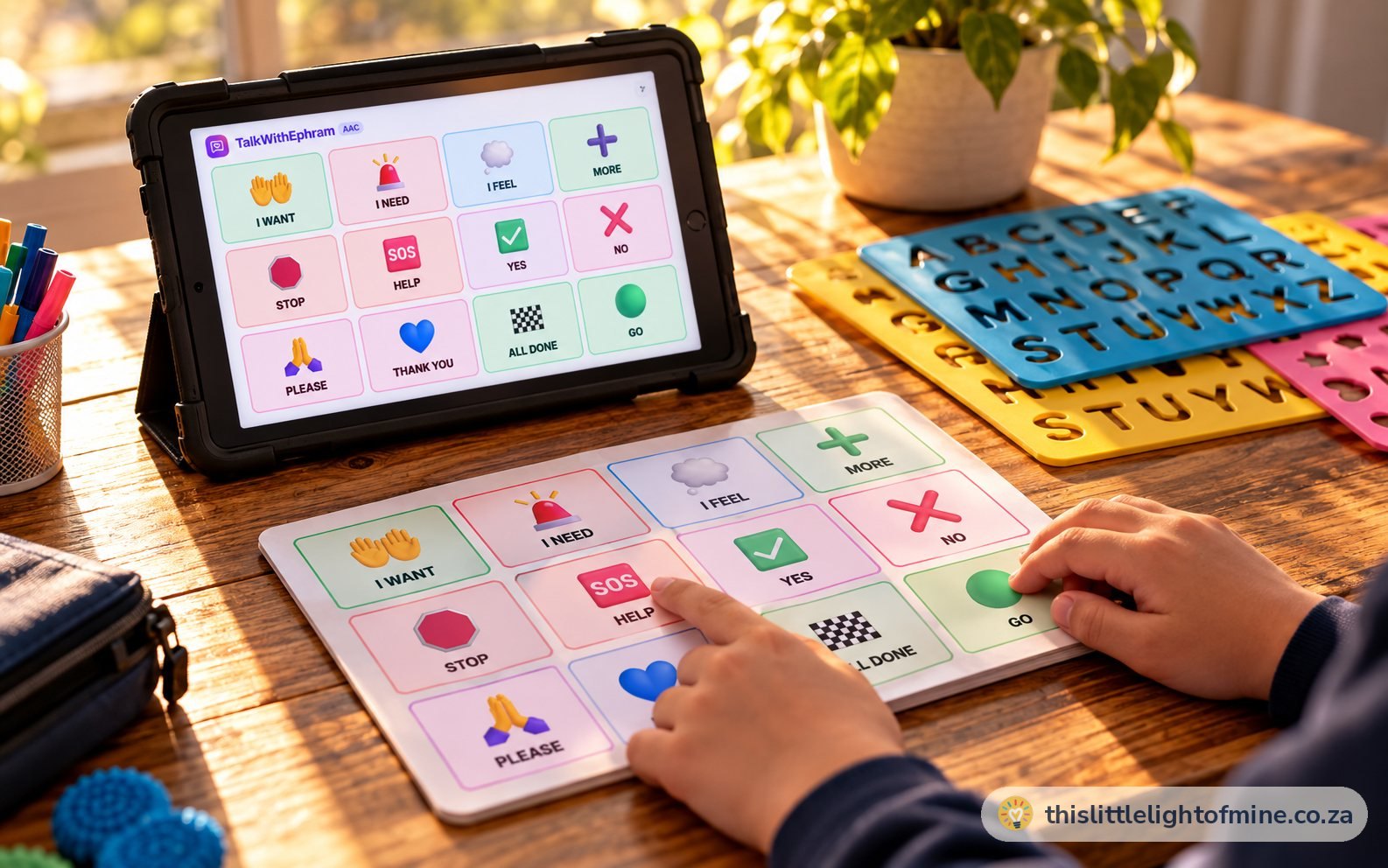
For non-speaking children, visual supports, gestures and communication devices can be particularly helpful.
Remember that teaching a skill does not guarantee that someone will use it in every situation.
Safety should never depend on verbal instructions alone.
7. Prepare for outings
Think about the environment before arriving.
Consider whether there are open exits, busy roads, water features or large crowds.
Where possible, plan for additional supervision and identify quieter spaces if your child becomes overwhelmed.
Small changes, big difference: making everyday places more welcoming
What should you do if your child goes missing?
This is something every family should think about before an emergency happens.
If your child goes missing, act immediately.
- Contact emergency services and report the disappearance.
- Explain that your child is autistic and describe their communication and safety needs.
- Provide a recent photograph and physical description.
- Alert nearby family members, security personnel and people in the immediate area.
- Prioritise nearby water sources, swimming pools, roads and other significant hazards when coordinating the search.
Do not wait to see whether your child returns on their own.
In South Africa, contact SAPS or the relevant emergency services immediately. The US emergency number 911 mentioned in some international resources does not apply here.
Helping others understand
One of the most important things we can do is create awareness.
A child who suddenly runs away may not be responding to their name, may not understand verbal instructions and may not be able to explain where they are going.
This is not necessarily defiance.
It may be a combination of communication differences, sensory needs, impulsivity and an incomplete understanding of danger.
Schools, shopping centres, community organisations and local neighbourhoods can all play a role in creating safer environments.
A little awareness from the people around us can make a significant difference.
A little reminder
For families who live with the possibility of elopement, everyday outings can require a great deal of planning and vigilance.
It can be exhausting, frightening and sometimes isolating.
But understanding why wandering happens, recognising potential triggers and putting appropriate safety measures in place can help families feel better prepared.
Most importantly, remember that a child who wanders is not being deliberately difficult.
Behind the behaviour is a person with needs, interests and a way of experiencing the world that deserves to be understood.
Share this story

We are the family behind This Little Light Of Mine, sharing our journey with profound autism to shine a light on autism and open doors to understanding.
A note about this article
This article shares our family's lived experience and general information. It is not a substitute for individual medical, developmental, educational, or professional advice.
More stories
Keep reading

How allowing time for a response can change the way we communicate and interact with autistic people.
Why communication cannot always be measured through speech, and why patience and individualised communication support matter.

From shops to churches to birthday parties, simple adjustments can help autistic people and their families take part. We share what has made a difference for us.
Follow our journey
On Facebook and Instagram we share more of the everyday moments, experiences, challenges and milestones that make up our family's journey.