Understanding life beyond spoken words
Not every conversation happens through speech. Sometimes, understanding begins when we learn to listen differently.
We live in a world where spoken language is often treated as the default way to communicate.
We ask questions and expect answers. We greet people and expect a greeting in return. We look for spoken explanations of feelings, needs and preferences.
But what happens when someone communicates differently?
For non-speaking autistic people, communication can take many forms. It may involve gestures, facial expressions, body movements, communication devices or individual signals that families and caregivers learn to recognise over time.
When we understand this, we begin to see communication differently.
We stop asking only whether someone can speak and start asking how we can help them communicate.
Communication is more than words
Speech is one way to express thoughts, feelings, preferences and needs. It is not the only way.
A person may communicate that they want something, that they are uncomfortable, that they enjoy an activity or that they need a break without saying a single word.
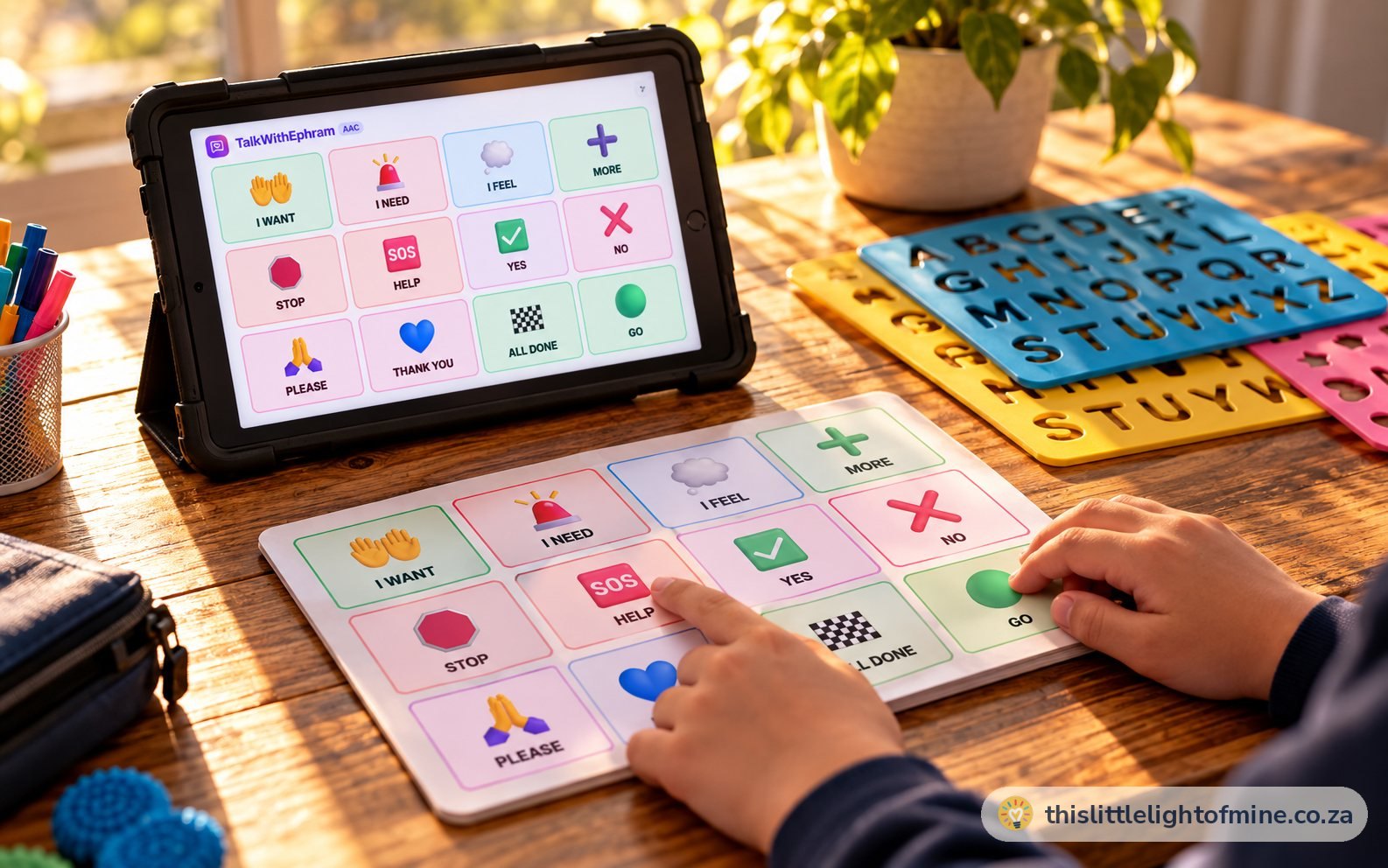
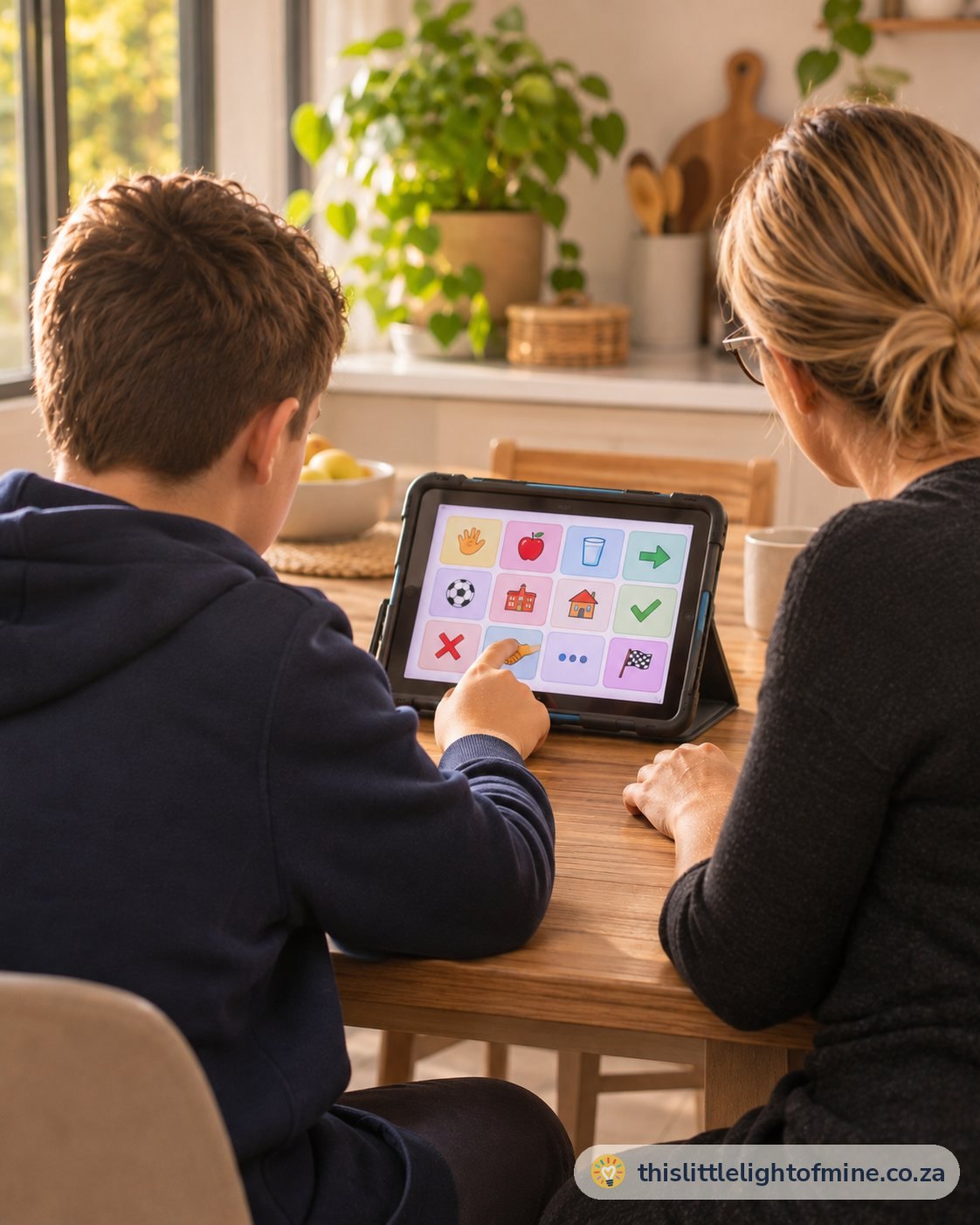
Some people use pictures or symbols. Others use gestures, communication boards or electronic devices that produce spoken messages.
There is no single communication method that works for every autistic person.
The important thing is to understand the individual and support the methods that work for them.
We must also be careful not to assume that every movement or behaviour has an obvious meaning. Communication signals can be individual and context-dependent, so learning to interpret them takes patience, observation and collaboration.
What is augmentative and alternative communication?
Augmentative and alternative communication, commonly called AAC, includes methods and tools that support communication.
These may include:
- Picture communication boards.
- Symbol-based communication books.
- Tablets with communication applications.
- Speech-generating devices.
- Letter boards and spelling systems.
- Gestures and other unaided communication methods.
Some people use AAC alongside spoken language. Others rely on it as their primary way of communicating.
AAC should be individualised to the person's needs, abilities, preferences and circumstances.
It is also important to remember that having access to a communication tool does not automatically mean communication will be easy. People may need time, support and opportunities to learn how to use their chosen system.
Most importantly, communication support should not be withheld simply because someone does not demonstrate a particular skill first.
Find AAC support in South Africa
Everyone deserves opportunities to express themselves.
Give communication time to happen
One of the simplest things we can do is slow down.
A person may need additional time to understand what has been said, consider the available options and prepare a response.
If we immediately repeat a question, offer several new instructions or answer on their behalf, we may unintentionally make communication more difficult.
Instead, try asking one clear question and allowing time for a response.
Offer choices when appropriate. Make communication tools available. Pay attention to individual signals without assuming you already know what the person means.
And remember that a lack of immediate response is not proof that someone hasn't understood.
Patience creates space for communication.
Behaviour can tell us something, too
When someone cannot easily communicate discomfort, frustration, pain or uncertainty, those experiences may become visible through changes in behaviour.
Perhaps an activity becomes difficult. Perhaps an environment is overwhelming. Perhaps something unexpected has happened.
Behaviour alone cannot tell us exactly what a person is experiencing, but it can be a reason to pause and investigate.
Rather than immediately interpreting behaviour as defiance or non-compliance, consider the wider context.
Is the environment too noisy? Has the routine changed? Is the instruction unclear? Could the person be uncomfortable or unwell? Is there another way to communicate the same message?
These questions encourage us to respond with curiosity rather than judgement.
Don't speak over someone just because they don't speak
When supporting a non-speaking person, it can be tempting to direct every question to the accompanying parent, caregiver or professional.
Sometimes support from another person is necessary, but we should still include the autistic person wherever possible.
Speak directly to them. Explain what is happening. Offer choices in an accessible way. Allow time for their response.
Do not assume that someone has no opinions simply because they do not express them through speech.
Respect means recognising the person's right to participate, make choices and be included in conversations about their own life.
Learning to listen differently
Understanding communication beyond spoken words requires us to change our expectations.
It asks us to become more observant, more patient and more willing to learn.
There will be times when communication is difficult. There may be misunderstandings. We may need to try different approaches or ask professionals with relevant expertise for guidance.
That is part of learning.
At This Little Light Of Mine, we want to encourage a world where communication differences are met with curiosity and respect rather than assumptions.
Because every person deserves a way to express themselves.
And sometimes, the most important conversation begins when we stop waiting for words and start making room for connection.
Let's shine a light on every way of communicating, because every voice deserves to be heard, in whatever form it takes.
Share this story
We are the family behind This Little Light Of Mine, sharing our journey with profound autism to shine a light on autism and open doors to understanding.
A note about this article
This article shares our family's lived experience and general information. It is not a substitute for individual medical, developmental, educational, or professional advice.
More stories
Keep reading

Autism is more than a diagnosis. It's about understanding a person's communication, sensory experiences, support needs and unique way of experiencing the world.

An ordinary day can feel very different when the world around you is overwhelming.

Sometimes, the most helpful thing we can offer someone is a little more time.
Follow our journey
On Facebook and Instagram we share more of the everyday moments, experiences, challenges and milestones that make up our family's journey.